How Often to Cut a Cat’s Nails: Essential Grooming Tips

Are you wondering how often to cut your cat’s nails? It’s a question many cat owners ask but don’t always find clear answers to.
Keeping your cat’s nails trimmed is important for their comfort and your furniture’s safety. But cutting too often or too little can cause problems. You’ll discover the perfect nail-cutting schedule for your furry friend. Plus, you’ll learn simple tips to make the process stress-free for both of you.
Keep reading to ensure your cat stays happy and healthy with nails trimmed just right.
Why Nail Care Matters
Taking care of your cat’s nails is very important. It helps keep your cat healthy and happy. Regular nail care stops many problems before they start. Short and neat nails make life easier for both you and your cat.
Let’s explore why nail care matters for your furry friend.
Preventing Injuries
Long nails can cause your cat to get hurt. Cats may scratch themselves by accident. Nails that are too long can get stuck in carpets or furniture. This can lead to painful breaks or tears. Keeping nails trimmed helps avoid these injuries.
Maintaining Comfort
Sharp nails can make walking uncomfortable for your cat. They may dig into their paw pads. This can cause pain or limping. Regular trimming keeps nails the right length. Your cat will feel more comfortable moving and playing.
Protecting Furniture
Cats love to scratch, but long nails can damage furniture. Scratches on sofas and curtains are common. Trimming nails reduces the damage. It helps protect your home and keeps your cat happy.
Credit: kdfoundation.org
Signs Your Cat Needs A Trim
Knowing when to trim your cat’s nails is important for their comfort. Cats do not always show pain, so watch for signs. These signs help you decide the right time to cut their nails safely.
Scratching More Often
Your cat may scratch more when nails grow long. They try to remove old nail layers or feel itchy. Scratching furniture or floors more can mean nails need trimming.
Visible Overgrowth
Check your cat’s nails often. Nails that curl or extend past the paw pads show overgrowth. Long nails can hurt your cat’s paws or cause injury.
Snagging On Fabrics
Notice if your cat’s nails catch on carpets or clothes. Snagging means the nails are too sharp or long. This can hurt your cat or damage your home items.
Ideal Frequency For Nail Trimming
Knowing how often to cut your cat’s nails helps keep them healthy and comfortable. Nail trimming prevents damage to furniture and skin. It also stops nails from growing too long or curling into the paw pads. The ideal frequency depends on several factors about your cat’s life and habits.
Indoor Vs Outdoor Cats
Indoor cats usually need nail trims more often. They do not wear down nails naturally by walking outside. Nails can grow sharp and long. Trimming every 2 to 3 weeks works well for most indoor cats.
Outdoor cats wear their nails on rough surfaces. They may need less trimming. Checking nails every 4 to 6 weeks is enough. Some outdoor cats rarely need trims if they stay active.
Age And Activity Level
Young, active cats often keep nails short by scratching and playing. They may need trims once a month or less. Older or less active cats may need trims every 2 to 3 weeks. Nails grow faster when cats are less active.
Seasonal Considerations
Seasons can change how fast nails grow. Nails may grow faster in spring and summer due to more activity. Check nails more often during these months. Winter months may require less frequent trims. Adjust nail care based on your cat’s needs.
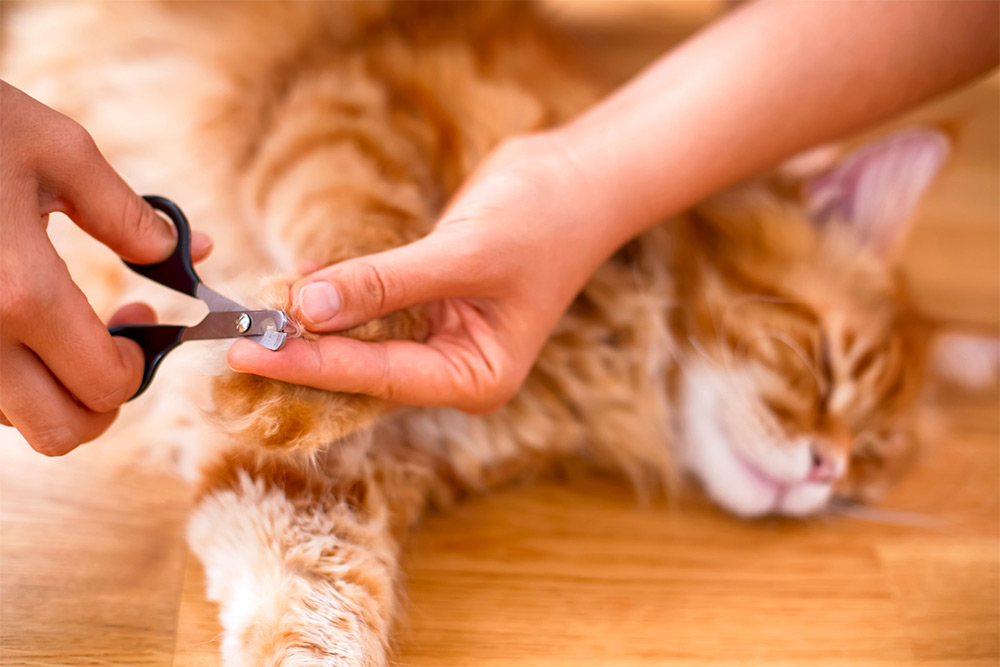
Credit: weareallaboutcats.com
Tools For Nail Cutting
Cutting a cat’s nails is easier with the right tools. Using proper equipment makes the process safe and quick. It also helps keep your cat calm and comfortable. Below are key tools you need for nail cutting.
Choosing The Right Clippers
Pick clippers made for cats or small pets. These clippers have sharp, curved blades. They cut cleanly without crushing the nail. Avoid using human nail clippers or large scissors. They can hurt your cat’s nails.
Using Nail Files
Nail files smooth rough edges after clipping. They help prevent scratching and snagging. Use a gentle, fine-grit file. Files are good for cats that dislike clipping. Filing takes longer but is less scary for cats.
Safety Equipment
Wear gloves to protect your hands from scratches. Use a towel to gently wrap your cat if needed. Keep styptic powder or pencil nearby. This stops bleeding if you cut too close. Safety tools help keep the nail trimming safe.
Step-by-step Nail Trimming Guide
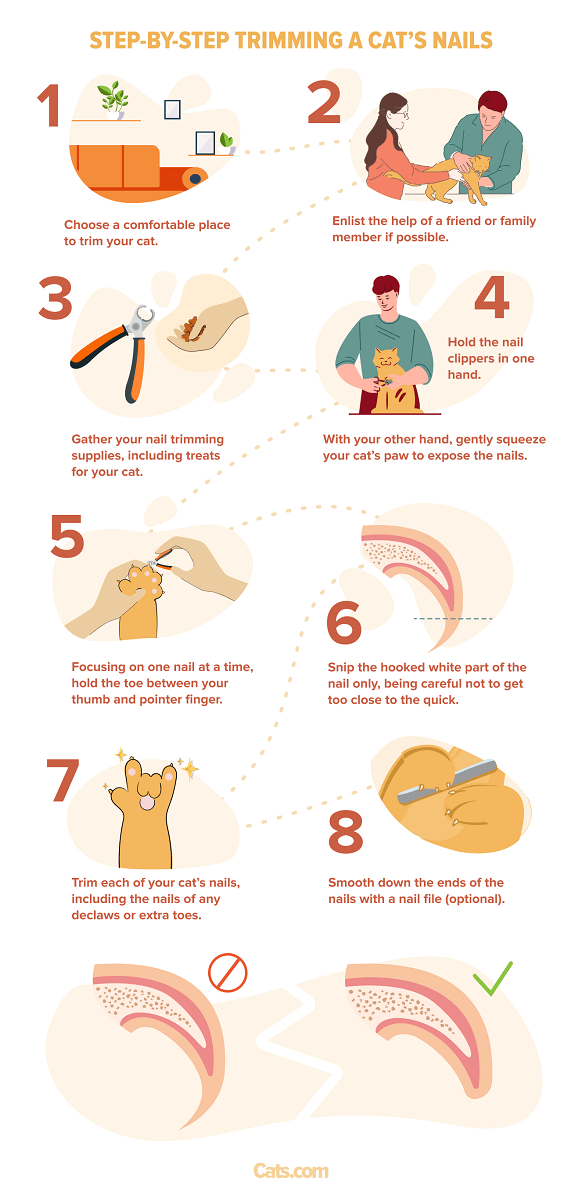
Trimming your cat’s nails can keep them healthy and prevent scratches. A clear, simple process helps both you and your cat feel calm. Follow these steps to make nail trimming easy and safe.
Preparing Your Cat
Choose a quiet, comfortable spot for trimming. Gently hold your cat and let them relax. Offer treats to create a positive feeling. Use a towel to wrap your cat if needed. Check the nails to find the quick, the pink part inside.
Proper Clipping Technique
Use sharp, small nail clippers made for cats. Hold the paw firmly but gently. Clip only the tip of the nail, avoiding the quick. Cut straight across to prevent splitting. Trim one or two nails at a time. Stop if your cat shows stress.
Handling Resistant Cats
Stay calm and speak softly to your cat. Try trimming after a nap or playtime when they are calm. Use gentle restraint with a towel if needed. Take breaks between nails to reduce stress. If needed, ask for help from another person. Reward your cat with treats after each session.
Aftercare And Monitoring
After trimming your cat’s nails, proper aftercare is very important. It helps keep your cat comfortable and prevents problems. Watching your cat closely can catch small issues early. This keeps the nail area healthy and pain-free.
Checking For Bleeding
Look at each nail right after cutting. Sometimes, nails can bleed if cut too short. Use a clean cloth to press on the nail tip. This helps stop the bleeding quickly. If bleeding does not stop in a few minutes, contact your vet.
Soothing Irritated Nails
Your cat’s nails may feel tender after trimming. Use a soft cloth with cool water to gently clean the area. Avoid harsh chemicals or creams that may irritate. Let your cat rest in a calm place to reduce stress and pain.
Rewarding Your Cat
Give your cat treats or gentle petting after nail care. This builds positive feelings about nail trimming. Praise your cat with a soft voice and calm touch. Rewards help make future nail cutting easier and less scary.
When To Seek Professional Help
Knowing when to seek professional help with your cat’s nail care is important. Some nail problems need expert attention. This keeps your cat safe and comfortable. It also prevents future issues with their paws and nails.
Signs Of Infection
Look for redness or swelling around the nails. Discharge or bad smell can mean infection. Your cat may lick or bite the nail area often. Limping or avoiding paw use is a warning sign. A vet can treat infections before they get worse.
Difficult Nail Shapes
Some cats have nails that grow oddly. Curved or thick nails can cause pain. Cutting these nails is tricky and risky. A professional groomer or vet knows how to handle these shapes safely. They use the right tools to avoid injury.
Behavioral Challenges
Cats scared of nail trims may fight or hide. Stress can make nail cutting unsafe. Professionals use gentle methods to calm cats. They help reduce fear and make nail care easier next time. This protects both you and your cat from scratches.

Credit: www.reddit.com
Frequently Asked Questions
How Often Should I Cut My Cat’s Nails?
Cut your cat’s nails every 2 to 4 weeks. Regular trimming prevents scratching damage and keeps claws healthy. Adjust frequency based on your cat’s activity and nail growth speed.
What Are Signs My Cat Needs Nail Trimming?
If you hear clicking sounds on hard floors or notice snagging on fabrics, it’s time to trim. Overgrown nails may curl and cause discomfort or injury.
Can I Trim My Cat’s Nails Myself Safely?
Yes, you can trim nails at home with proper tools and technique. Use sharp cat nail clippers and avoid the quick to prevent pain and bleeding.
Why Is Regular Nail Trimming Important For Cats?
Regular trimming prevents painful nail overgrowth, reduces furniture damage, and lowers the risk of infections. It also helps maintain your cat’s comfort and mobility.
Conclusion
Regular nail trimming keeps your cat comfortable and healthy. Check nails every two to four weeks. Short nails prevent scratching furniture and skin. Watch your cat’s behavior for signs of long nails. Use proper tools and trim carefully to avoid pain.
Nail care helps your cat feel calm and happy. Make nail trimming a gentle routine. It protects both your cat and your home. Small efforts bring big benefits for your pet. Keep nails neat and your cat will thank you.