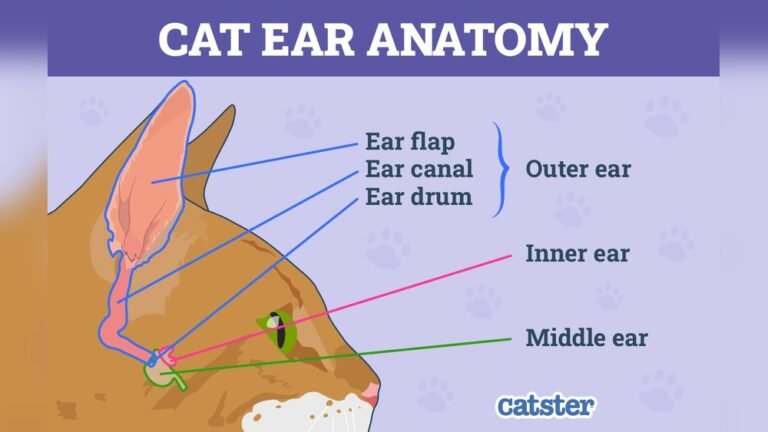
How Many Muscles are in a Cat’s Ear: Surprising Facts Revealed

Have you ever noticed how your cat can swivel its ears almost like radar dishes? It’s not just a cute trick—there’s a fascinating reason behind it.
Your cat’s ears are powered by a surprising number of muscles that give them incredible control and precision. But exactly how many muscles are in a cat’s ear? Understanding this will change the way you see your furry friend’s amazing hearing and communication skills.
Keep reading, and you’ll discover secrets about your cat’s ears that will amaze you!
Muscle Count In A Cat’s Ear
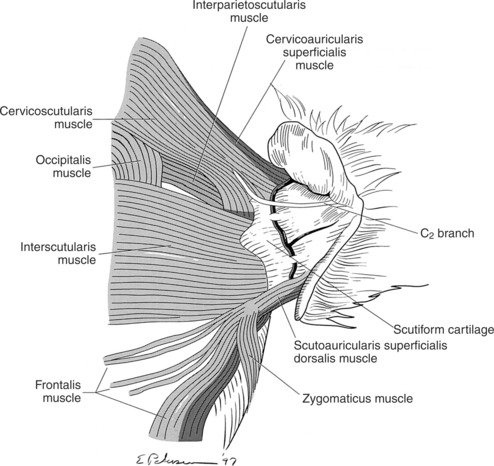
Cats have very flexible ears. This flexibility comes from many small muscles. These muscles help cats move their ears in different directions. The number of muscles in a cat’s ear is higher than in many other animals.
Each ear has about 32 muscles. These muscles control the shape and movement of the ear. They allow cats to turn their ears towards sounds quickly. This ability helps cats hear better and locate sounds precisely.
Number Of Muscles In Each Ear
A single cat ear contains roughly 32 muscles. These muscles work together to move the ear in many directions. Cats can rotate their ears up to 180 degrees. This wide range of motion is rare in most animals.
Functions Of Ear Muscles
The muscles help cats catch sounds from different angles. They also help in expressing emotions. When a cat is alert, its ear muscles tighten. Relaxed muscles show calm or sleepiness. These muscles are key to a cat’s communication.
Comparison To Other Animals
Cats have more ear muscles than dogs or humans. This gives cats better hearing and ear control. Dogs have about 18 ear muscles. Humans have only 6 muscles in the ear. This explains why cats can hear faint sounds well.
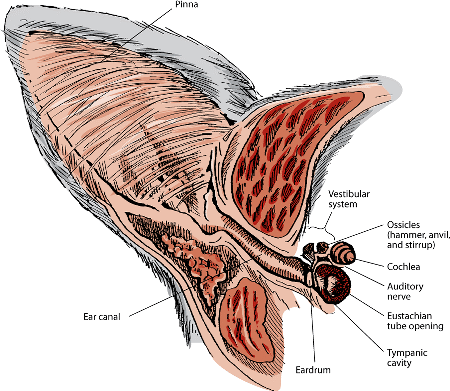
Credit: www.merckvetmanual.com
Ear Muscle Functions
Cats have many muscles in their ears. These muscles help cats use their ears in different ways. Each muscle plays a special role. Together, they allow cats to move, hear, and communicate.
Movement And Rotation
Cat ear muscles let cats move their ears quickly. They can rotate each ear almost 180 degrees. This helps cats listen to sounds from all sides. The movement is smooth and fast. It helps cats stay alert and aware.
Sound Localization
Ear muscles adjust the ear position to catch sounds better. Cats can find exactly where a sound comes from. This skill helps them hunt and avoid danger. Muscles help focus the ear toward sounds. It makes their hearing sharp and precise.
Communication Signals
Cats use their ear muscles to show feelings. Ears pointing forward mean curiosity or alertness. Flattened ears show fear or anger. Movements of the ears send signals to other cats. This helps cats talk without making sounds.
Comparison With Other Animals
Cat ears have many muscles. These muscles help cats move their ears independently. This ability helps cats hear better and stay alert. Other animals also have muscles in their ears. Comparing these can show how cats are unique in ear movement and hearing.
Dogs Vs Cats
Dogs have fewer muscles in their ears than cats. Usually, dogs have about 18 muscles in each ear. Cats have around 32 muscles. This difference makes cats’ ears more flexible. Dogs’ ears move mostly to catch sounds. Cats can rotate their ears more, pinpointing sounds precisely.
Wild Cats Vs Domestic Cats
Wild cats have similar ear muscles to domestic cats. Both have about 32 muscles in each ear. This helps them hunt and avoid danger. Wild cats use ear muscles for better sound detection in nature. Domestic cats keep this ability even inside homes. It shows how important ear muscles are for all cats.
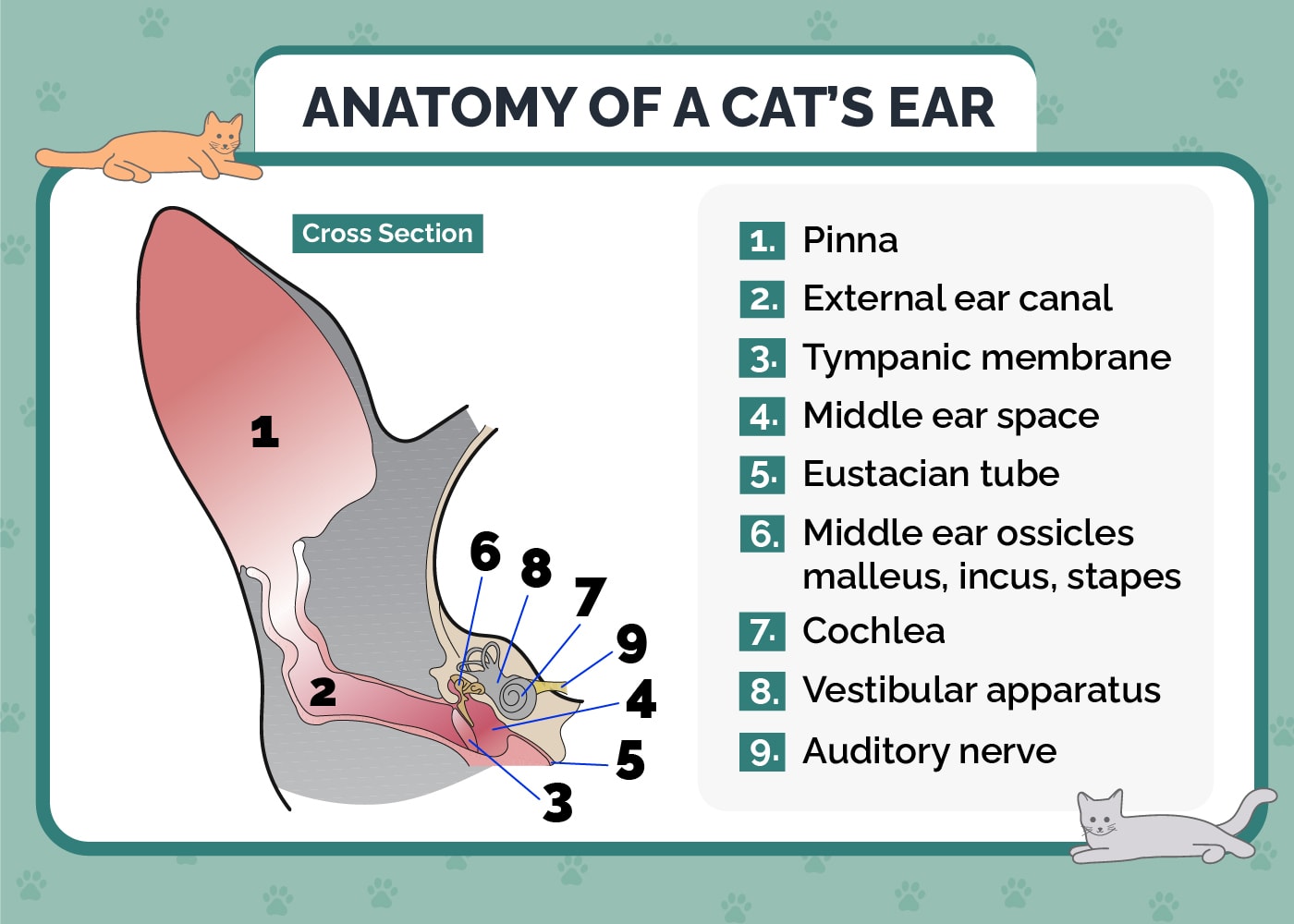
Credit: articles.hepper.com
Unique Adaptations
Cats have a special design in their ears. Their ears move fast and in many ways. This helps cats hear better and stay alert. The secret lies in the many muscles in their ears. These muscles give cats unique skills.
Muscle Strength And Precision
Cats have about 32 muscles in each ear. These muscles are strong and very precise. They allow cats to rotate their ears up to 180 degrees. Cats can tilt and move their ears to catch sounds. This helps them hear even soft noises from far away.
Muscle control lets cats focus on one sound at a time. They can quickly change ear direction without moving their head. This ability helps cats react fast to their environment.
Evolutionary Advantages
These ear muscles give cats a survival edge. Sharp hearing helps them find prey in the wild. Quiet and quick ear movements keep them hidden from danger. Cats can hear sounds that humans miss entirely.
Over time, cats evolved these muscles to fit their needs. Their ear muscles support hunting and avoiding threats. This adaptation makes cats skilled hunters and alert pets.
Impact On Cat Behavior
Cats have many muscles in their ears. These muscles help cats move their ears in many ways. The way cats move their ears shows a lot about how they feel and what they want to do. Understanding these ear movements helps us learn about cat behavior.
These muscles give cats great control. Cats can turn their ears toward sounds quickly. This ability affects how cats behave in their daily life.
Hunting And Alertness
Cats use ear muscles to find prey. Their ears move to catch small sounds. This helps them hunt better. When a cat hears a mouse, the ears point toward the noise. The cat stays very alert. This alertness helps cats catch food and stay safe from danger.
Social Interactions
Cats also use ear movements to talk with other cats. Ears that point forward show interest. Ears that fold back can mean fear or anger. These signals help cats avoid fights. They also help cats make friends. The muscles in the ears help cats send clear messages to others.
Credit: veteriankey.com
Frequently Asked Questions
How Many Muscles Control A Cat’s Ear Movement?
A cat’s ear has 32 muscles that control its movement. These muscles allow cats to rotate their ears independently and detect sounds precisely.
Why Do Cats Have So Many Ear Muscles?
Cats have many ear muscles for precise sound localization. This helps them hunt effectively and stay alert to their surroundings.
Can Cats Move Their Ears Independently?
Yes, cats can move their ears independently thanks to their 32 ear muscles. This ability helps them detect sounds from different directions.
How Do Ear Muscles Help Cats Hear Better?
Ear muscles help cats adjust ear position to capture sounds better. This enhances their hearing sensitivity and directional hearing skills.
Conclusion
Cats have about 32 muscles in each ear. These muscles help cats move their ears in many directions. This ability helps cats hear sounds better and stay alert. Their ear muscles also show their mood and feelings. Understanding this helps us appreciate how special cats are.
Next time you see a cat, watch its ears closely. You will notice how they move quickly and smoothly. That’s the work of many small muscles working together. Cats truly have amazing ear muscles.